
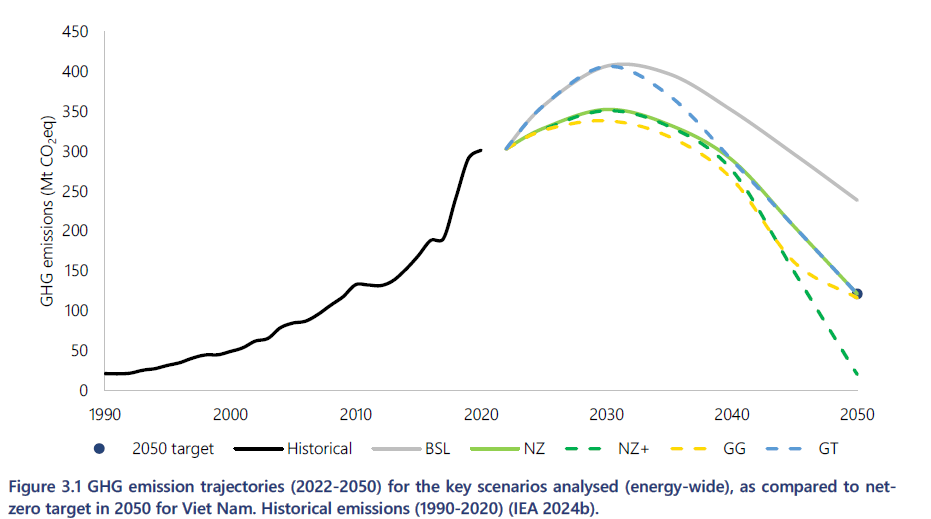
The growing adoption of solar power offers substantial advantages for both the environment and the economy. A recent report highlights a concerning projection: without significant change, greenhouse gas emissions from Vietnam’s energy sector could reach 650 million tons of CO2 equivalent by 2030, representing over 80% of the nation’s total emissions. This underscores the urgency of transitioning to cleaner energy solutions. Fortunately, transitioning to renewable energy sources, particularly net-zero rooftop solar systems, presents a viable pathway to significantly reduce these emissions and aligns with Vietnam’s commitment to achieving Net-Zero by 2050. The accessibility of rooftop solar makes it a practical and impactful solution. For businesses, installing rooftop solar systems provides a compelling economic incentive. Companies can expect to save an average of 20-30% on their monthly electricity bills. Furthermore, businesses can generate and trade energy certificates, like I-REC, further enhancing their financial returns. The development of rooftop solar systems in Vietnam is significantly influenced by evolving national policies. The approved National Power Development Plan 2021–2030, with a vision extending to 2050, prioritizes renewable energy and sets an ambitious goal of achieving net-zero emissions by 2050, a commitment made at COP26. Recently, Decree No. 80/2024/ND-CP was introduced, establishing a framework for Direct Power Purchase Agreements (DPPAs). This regulation is designed to accelerate the transition to green energy by enabling businesses to utilize private transmission lines and connect to the national grid. The decree fosters a more competitive and transparent energy market, allowing businesses to directly engage with power producers, negotiate pricing, and benefit from supply and demand dynamics—a vital component for the viability of rooftop solar power projects. These policy changes signal a strong governmental commitment to renewable energy and provide a more predictable and supportive environment for investments in rooftop solar power and other clean energy solutions. Investing in rooftop solar systems presents compelling economic advantages for businesses. Companies can potentially reduce monthly electricity expenses by 20-30% through power purchase agreement (PPA) arrangements, creating a long-term strategy for minimizing operational costs and improving energy efficiency. Solar energy also provides a predictable and sustainable power source, lessening reliance on the grid and safeguarding against unpredictable electricity price increases. renewable energy provides a predictable and sustainable power source, lessening reliance on the grid and safeguarding against unpredictable electricity price increases. Moreover, growth in the solar power sector, driven by innovative technologies, can enhance efficiency and attract environmentally conscious investors. Businesses can further bolster their brand reputation and demonstrate a dedication to sustainability by participating in energy certificate programs, such as I-REC, solidifying their commitment to responsible environmental practices. Increasingly, international policies are driving a demand for emission reductions and renewable energy adoption. The EU’s Carbon Border Adjustment Mechanism (CBAM), for example, requires companies exporting to the EU to declare and potentially pay a “carbon tax” based on their carbon footprint. This creates immediate pressure for businesses to rapidly green their operations and explore solutions like rooftop solar systems. A 1MWp solar power system can significantly reduce emissions, potentially by 864.35 tons of CO2 annually, based on Vietnam’s 2022 power grid emission coefficient. This can be a key strategy for businesses to meet increasingly stringent Scope 2 emission reduction targets. Furthermore, major global corporations are now demanding that their supply chain partners also adhere to commitments for 100% renewable energy use. The outlook for rooftop solar power development in Vietnam is promising, despite existing challenges. A development plan for Ho Chi Minh City indicates that rooftop solar energy, particularly within the manufacturing sector, could reach 1,589 MWp by 2030. This substantial potential underscores the growing need for renewable energy solutions. Achieving Vietnam’s commitment to net-zero emissions by 2050 requires a focus on innovation and efficiency. Integrating rooftop solar systems with energy storage devices is a key strategy. This combination not only helps businesses reduce their electricity expenses but also alleviates strain on the national grid during peak demand. Furthermore, it can help companies avoid limitations on solar development quotas across different regions. Beyond the economic benefits, solar power projects contribute significantly to minimizing environmental impact and demonstrate a company’s dedication to sustainability practices. Investing in rooftop solar power is a tangible step towards a greener future. Vu Phong Energy Group partners with businesses on their journey towards green production, emissions reduction, and sustainable development by providing: To explore how we can help you transition to clean energy, contact our hotline at 1800 7171 or +84 9 1800 7171 or email us at hello@vuphong.com for expert support! Vu Phong Energy Group Source: https://vuphong.com/overview-of-rooftop-solar-power/.The Importance of Solar Power
Policy context
Opportunities for businesses
Boost from international policies
Future potential
Recent Posts
-
 Unlocking Potential: How Mindset Drives Success at Vu Phong Energy Group
 -
 Vu Phong Handbook: Sustainable Solutions for Net-Zero & Digital Transformation
 -
 Vietnam’s Decree 135: Boost for Rooftop Solar Power & Green Transition
 -
 Zero Capex Solar: Vietnam’s Path to Net-Zero Emissions
 -
 Vu Phong Energy Group Achieves Key Milestones in Renewable Energy Transition – November 2024


