
During the transitional phase of the EU’s CBAM mechanism, importers of cement, steel, aluminum, fertilizers, and hydrogen products must report direct and indirect greenhouse gas emissions, including emissions from electricity use during manufacture. This critical regulation underscores the increasing global emphasis on sustainable production and supply chain transparency. For businesses, particularly those in Vietnam exporting to the European Union, understanding and adapting to these new requirements is essential to maintain competitiveness and ensure long-term operational viability. The Carbon Border Adjustment Mechanism (CBAM) directly impacts carbon accounting practices, requiring meticulous attention to all forms of greenhouse gas reporting.
- What may you not know about the carbon credit market?
- Ho Chi Minh City needs a breakthrough development mechanism to pioneer in neutralizing emissions
- VP Energy invests in a 1.5 MWp solar power system on the roof of Chien Thang Industrial Company Limited ‘s factory
Electricity emissions are a part of the report.
The European Union’s Carbon Border Adjustment Mechanism (CBAM) specifically mandates that importers report both direct and indirect greenhouse gas emissions. For indirect emissions, this includes detailed data on electricity consumption (measured in MWh) during the manufacturing process of each ton of goods, along with the corresponding emission factor for that electricity. This reporting requirement applies to key products such as cement, steel, aluminum, fertilizers, and hydrogen during the transitional phase. Businesses must meticulously track these emissions reported to comply with the EU CBAM guidelines.
Impacts of CBAM mechanism on Vietnamese enterprises
Consequently, emissions from electricity consumption present a significant concern for enterprises in Vietnam, especially those directly impacted by the iron and steel enterprises facing CBAM challenges and other industries exporting to the EU market. The four industrial groups primarily affected include aluminum, steel, cement, and fertilizers. These sectors are characterized by their heavy reliance on electricity for production, making accurate greenhouse gas reporting and effective carbon border adjustment strategies crucial for their continued market access and competitiveness within the EU.
The role of electricity in CBAM mechanism
As announced by the Climate Change Department, Ministry of Natural Resources and Environment on December 31, 2022, Vietnam’s electricity grid emission factor for 2021 was 0.7221 tCO2/MWh. A practical calculation illustrates the impact: in the cement industry, with an average consumption of approximately 100 kWh of electricity per ton of cement, 1,000 tons would generate about 72.21 tCO2 from national grid electricity. For the steel industry, consuming 400-600 kWh per ton of steel means 1,000 tons could produce around 288-433 tCO2. Given the increasing trend in steel exports to the EU, bolstered by the EVFTA (Vietnam-EU Free Trade Agreement), Vietnamese businesses must reduce electricity emissions immediately to alleviate pressure and enhance their competitiveness as the CBAM tax phase approaches. This emphasizes the vital role of electricity in CBAM compliance and the need for energy cost optimization.
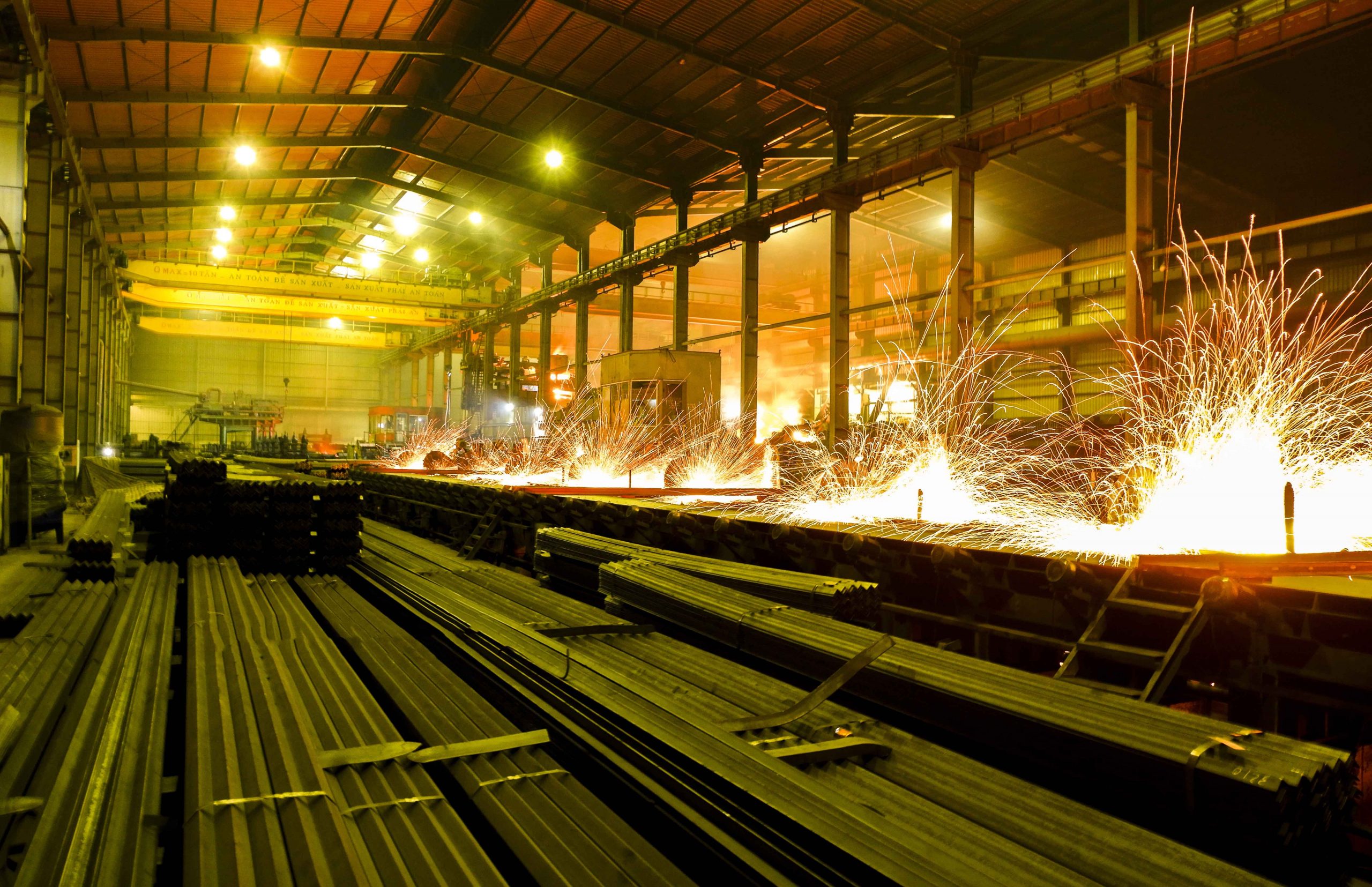 Aluminum, steel, cement, and fertilizer are manufacturing industries that rely heavily on electricity for production (Internet image)
Optimizing electricity efficiency for businesses
Advanced technology plays a pivotal role in optimizing electricity efficiency for businesses. Many steel and cement enterprises have successfully adopted waste-heat recovery technologies for power generation. For instance, Hoa Phat Steel utilizes German technology to convert excess heat from steel production into electricity, enabling it to self-generate a substantial portion (up to 75-80%) of its electricity needs. Similarly, the Do Luong Cement Plant’s excess heat gas power generation system captures waste gas heat from the clinker production line to produce steam for a turbine generator, contributing over 100 million kWh annually, covering 39% of the factory’s total electricity consumption. These renewable energy solutions demonstrate effective strategies to reduce greenhouse gas emissions.
Furthermore, by installing solar solutions on factory rooftops, enterprises can significantly enhance their on-site power supply, increase electricity self-sufficiency, and consequently reduce consumption from the national grid. A 3 MWp rooftop solar power system, particularly in the southern region of Vietnam, could generate approximately 4,300 MWh of electricity per year, thereby assisting the company in reducing emissions by up to 3,100 tCO2 annually. This direct contribution to lowering indirect emissions strengthens a company’s position under the CBAM mechanism.
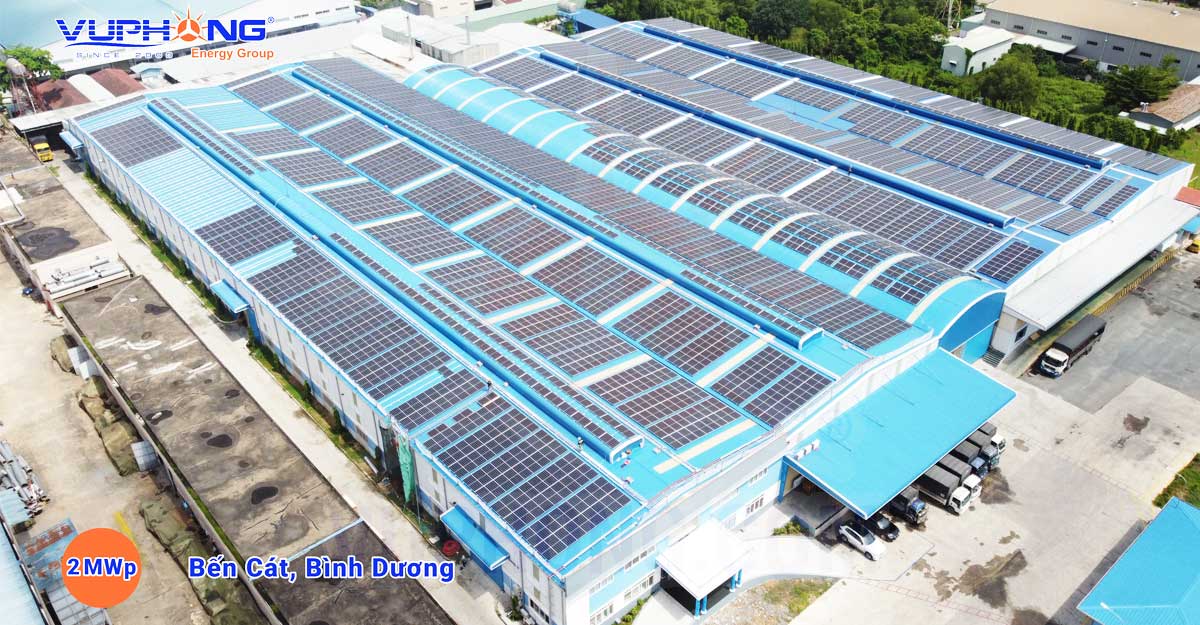 Using solar energy can help businesses reduce indirect emissions
Using a Power Purchase Agreement (PPA) for solar energy offers a significant advantage for manufacturing enterprises, as it eliminates upfront investment and system operating costs. This model also allows businesses to purchase electricity at preferential rates, often 20-30% lower than current national grid pricing. Many prominent enterprises in Vietnam, including Vinamilk, Kem Nghia, Duy Tan, DWS, and An Tien Industries (under An Phat Holdings), have embraced this flexible collaboration approach, pioneered by Vu Phong Energy Group. This partnership enables effective energy cost optimization and supports sustainable production practices.
With the PPA model, Vu Phong Energy Group and investment funds like VP Energy proactively invest in solar power systems on business rooftops. Businesses then purchase electricity at preferential rates through long-term cooperation contracts. At the end of the contract term, businesses can acquire the entire system at zero cost, with a committed performance transfer exceeding 80-90% under specified conditions. This provides an optimal solution that helps businesses tackle the dual challenges of reducing indirect emissions from electricity consumption and optimizing energy costs in production, all while avoiding significant capital investment hurdles for such systems. This showcases a practical pathway to achieve environmental and economic benefits within the EU CBAM framework.
The future of CBAM mechanism
The EU’s Carbon Border Adjustment Mechanism (CBAM) officially began its transitional phase on October 1, 2023. Many experts anticipate that other major global markets, including the United States, Japan, and South Korea, may soon implement similar carbon border adjustment policies, extending to a wider array of goods. Consequently, Vietnamese businesses currently engaged in or planning to enter the international market across various industries, such as textiles, plastics, leather shoes, and wood, must proactively adapt to this emerging trend. Strategic preparation now, particularly in production planning to reduce all forms of emissions, including indirect electricity emissions, is vital for future competitiveness and market access. Such foresight will be key to navigating the evolving landscape of global carbon credit market regulations.
| Businesses interested in the PPA (Power Purchase Agreement) cooperation model and clean energy solutions, please contact Our Call Center via 1800 7171 or +84 9 1800 7171 or send an email to hello@vuphong.com for more information. |
Vu Phong Energy Group
Recent Posts
-
 Unlocking Potential: How Mindset Drives Success at Vu Phong Energy Group
 -
 Vu Phong Handbook: Sustainable Solutions for Net-Zero & Digital Transformation
 -
 Vietnam’s Decree 135: Boost for Rooftop Solar Power & Green Transition
 -
 Zero Capex Solar: Vietnam’s Path to Net-Zero Emissions
 -
 Vu Phong Energy Group Achieves Key Milestones in Renewable Energy Transition – November 2024


